
Your first stock investments explained step by step
You want to start investing, but picking stocks, choosing an account and managing risk feels overwhelming. Here is a clear path that shows what to open, what to buy and how to keep costs and mistakes in check.
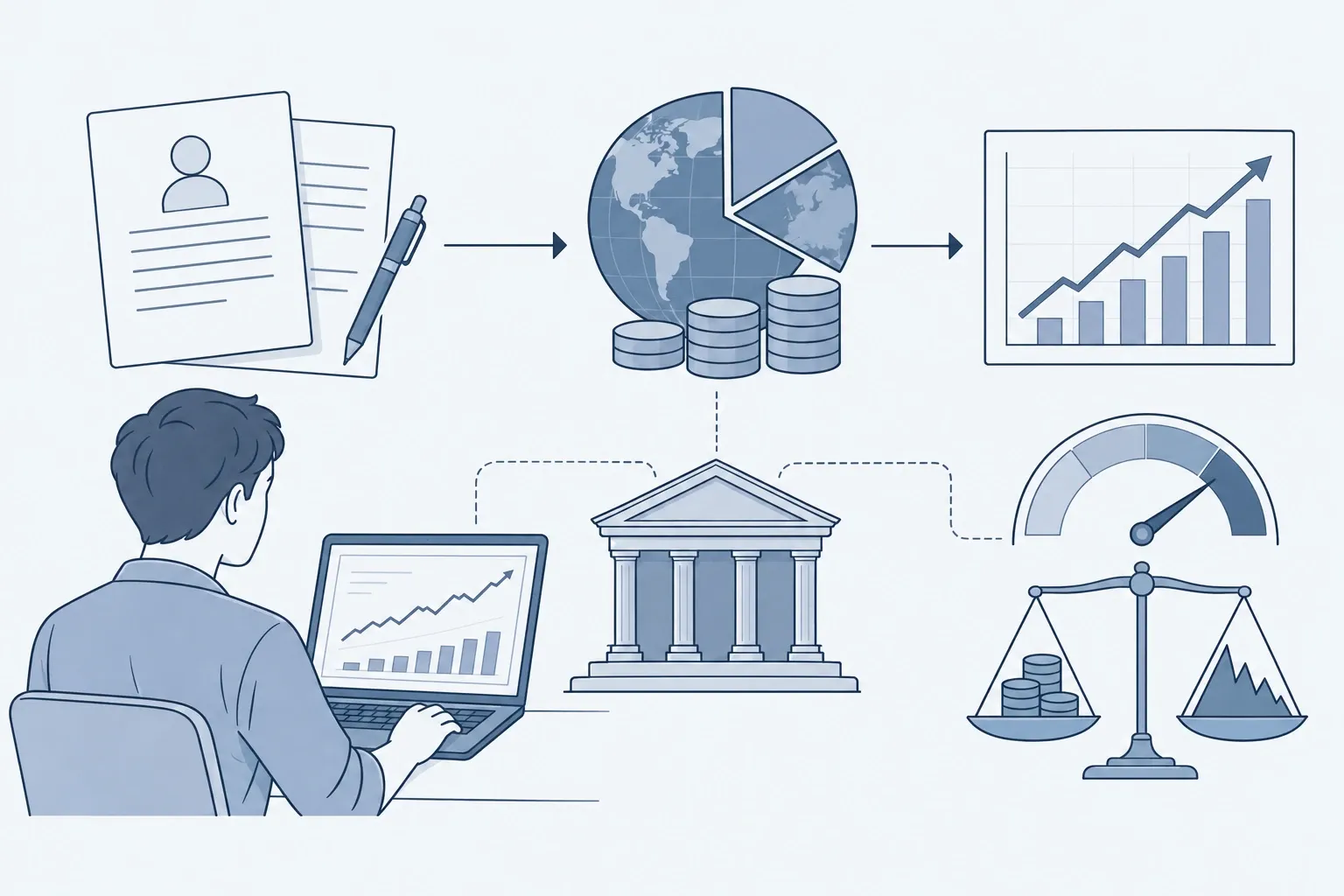
If you’re new to investing, the hardest part isn’t finding the “best” stock—it’s setting up a simple system you can stick with through ups and downs. You’ll choose an account, decide whether to use a tax‑advantaged plan or a regular brokerage, pick broadly diversified funds instead of betting on single names, and automate contributions. Along the way you’ll learn what fees matter, what protection you have if a broker fails, and how to check your progress without overreacting to headlines.
What should you have in place before buying your first stock?
Start with cash for near‑term needs and surprises. The SEC’s investor education site highlights the value of building an emergency fund before taking market risk and of contributing regularly rather than sporadically (Investor.gov on getting started). If your budget is tight, first stabilize your cash flow with a simple plan to track income, bills and savings in our guide to make a budget.
Which account should you open to invest?
You have two broad choices:
- A taxable brokerage account, which is flexible and easy to open. You can buy stocks and exchange‑traded funds (ETFs) and sell anytime, but you’ll owe taxes when you realize gains or receive dividends.
- A tax‑advantaged retirement account, such as a 401(k)/403(b) through an employer or an Individual Retirement Arrangement (IRA) you open yourself. Traditional IRAs may offer tax‑deductible contributions; Roth IRAs trade an upfront deduction for potentially tax‑free qualified withdrawals in retirement. The IRS explains the core differences and tax treatment of traditional and Roth IRAs (IRS: Traditional and Roth IRAs).
If your employer offers a plan with a match, prioritize contributing enough to capture the match—then consider adding an IRA or a taxable account for additional savings.
What should beginners buy: individual stocks or index funds?
For most starters, broad index funds—available as mutual funds or ETFs—are the simplest way to own hundreds or thousands of companies in one trade. Index funds seek to track a market index and often have lower costs than actively managed funds, but you should still check fees and the fund’s objective (Investor.gov on index funds).
Diversification is your main risk tool: spreading money across assets and sectors helps soften the blow when one area drops. The SEC’s asset allocation guidance explains how mixing stocks and bonds and avoiding overly narrow funds can reduce risk (Investor.gov on asset allocation).
How do you keep costs low?
Fees compound against you. For funds, the annual operating expense—shown as the “expense ratio”—is the key number. Even small differences add up over time. FINRA explains common mutual fund costs and offers a Fund Analyzer to compare expenses across funds (FINRA on mutual fund fees). Prefer broadly diversified index funds with low expense ratios and avoid frequent trading that can trigger commissions, bid‑ask spreads and taxes.
How do you place your first order, step by step?
- Open an account (taxable brokerage or IRA) and enable two‑factor authentication.
- Link a bank account and set an automatic monthly transfer you can maintain.
- Choose a broadly diversified index fund or ETF that matches your goal (for example, a total U.S. stock market fund). Confirm the ticker, expense ratio and the fund’s objective.
- Decide on dollar‑cost averaging: invest a set amount on the same day each month. The SEC defines this approach as investing equal amounts at regular intervals regardless of market ups and downs (Investor.gov: dollar‑cost averaging).
- Place a market or limit order during market hours. For ETFs, a simple market order for a small number of shares is typically fine; use limit orders if you’re trading when markets are volatile.
How much risk should a beginner take?
Match risk to time horizon. Money you need within three to five years doesn’t belong in stocks. For longer goals, many beginners start with a high share of stocks for growth and add bonds to reduce swings. The SEC’s guidance emphasizes that diversification helps, but narrow funds (for example, single sectors) won’t diversify your risk the way a broad market fund does.
How do you minimize avoidable mistakes?
- Keep investing through cycles—avoid trying to time the market. Regular contributions help you buy more shares when prices are lower.
- Favor low‑cost, diversified funds; check expense ratios with FINRA’s tool.
- Keep your emergency fund and bill money out of the market so you aren’t forced to sell investments to cover expenses. If you’re still building cash buffers or paying high‑interest debt, use a basic plan to organize your budget.
What protection do you have if a broker fails?
Your investments can fall in value—that risk is on you. But if a SIPC‑member brokerage fails, the Securities Investor Protection Corporation may replace missing securities and cash in your brokerage account up to $500,000, including up to $250,000 for cash; SIPC doesn’t protect against market losses. The SEC’s investor bulletin explains these limits and how SIPC differs from deposit insurance at banks (SEC investor bulletin: SIPC basics).
How do you monitor and rebalance without overreacting?
Check in on a set cadence—quarterly or twice a year. Compare your actual mix to your target (for example, 80% stocks/20% bonds). If it drifts meaningfully, sell a portion of what’s overweight and buy what’s underweight, or direct new contributions to the lagging asset. The SEC notes that rebalancing is a core part of maintaining your chosen risk level (Investor.gov: guide to asset allocation and rebalancing).
Frequently asked questions
How much do I need to start investing in stocks?
You can begin with small, regular amounts—many brokerages have no minimum for a taxable account and allow fractional shares. The key is setting a monthly contribution you can sustain after covering essentials and an emergency fund. Automating deposits helps you stay consistent through market ups and downs.
Are ETFs safer than individual stocks?
Neither product removes market risk. But a total‑market or S&P 500 ETF spreads your money across many companies, which reduces the impact of any single stock. Narrow, single‑sector or single‑country funds won’t diversify as broadly. Check each fund’s objective and holdings before buying.
Should I invest or pay off debt first?
High‑interest debt usually costs more than the long‑run return you might expect from diversified investments. Build a basic emergency fund and tackle expensive debt before ramping up investing. If you’re unsure how to create room in your cash flow, start with a simple budget in our guide to manage your money.
What if the market drops right after I invest?
Declines are normal. Using dollar‑cost averaging—investing a fixed amount on a set schedule—reduces the risk of committing all your cash at a short‑term peak. A diversified allocation and an emergency fund help you avoid selling at the worst time.
In this section Finance