
FAFSA, grants, loans and work‑study: how to build a real financial aid plan for college
You’re weighing college costs and keep hearing “fill out the FAFSA.” Here’s what financial aid really includes, when to apply, what’s free versus what you repay, and how to choose wisely.
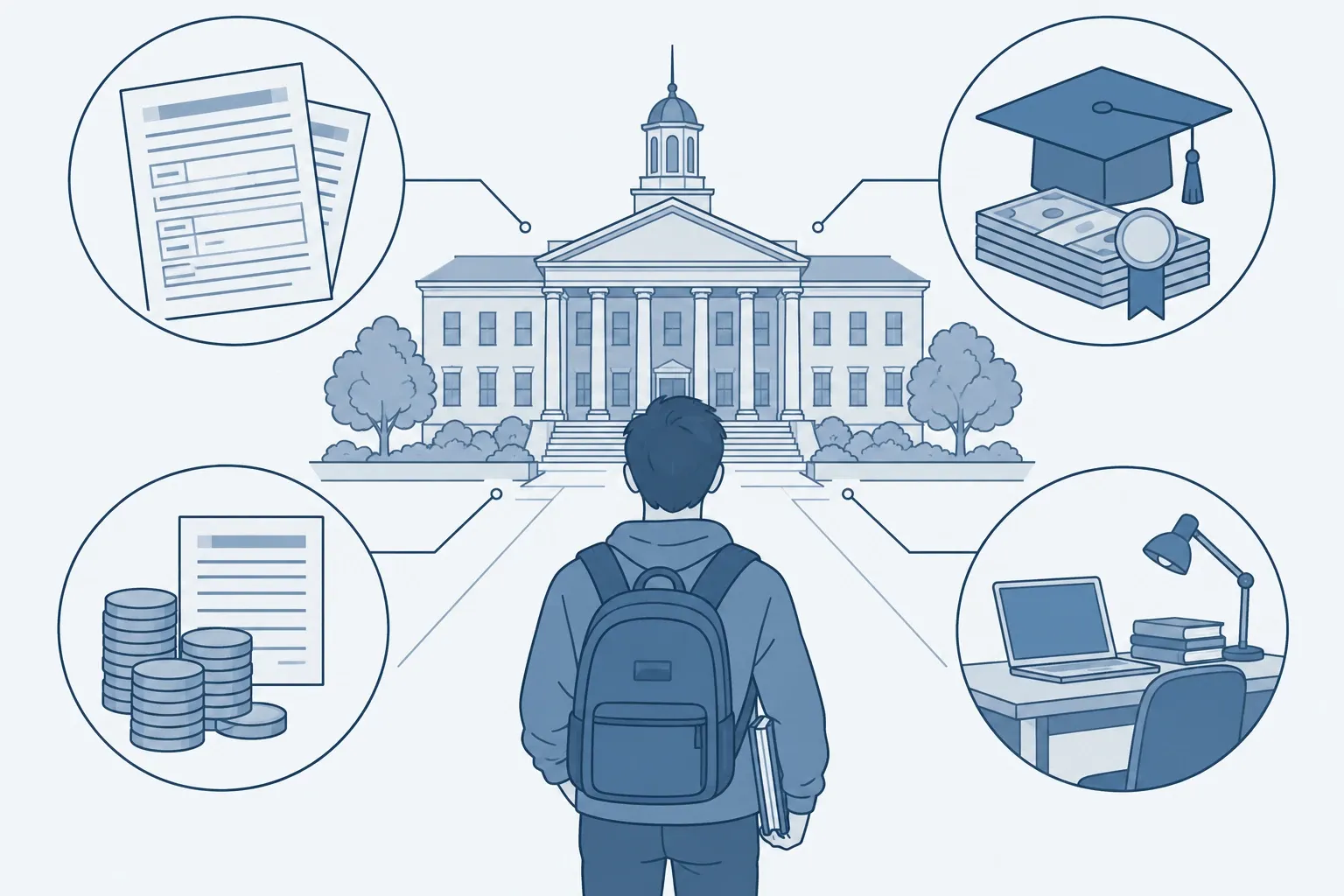
If you plan to attend college between July 1, 2026 and June 30, 2027, the 2026–27 FAFSA is open today (October 1, 2026). The federal deadline for that year is June 30, 2027, but many states and colleges set earlier priority dates. Below, you’ll see exactly what FAFSA does, the aid types it unlocks, how to read offers, and the order to accept money so you minimize what you owe later. We also link to official sources for every rule and figure so you can double‑check details that affect your budget.
What does the FAFSA actually do?
FAFSA is the free federal form that unlocks eligibility for federal Pell Grants, work‑study and Direct Loans, and many state and institutional programs. For 2026–27, you’ll use the FAFSA to attend any term between July 1, 2026 and June 30, 2027, and the federal submission deadline is June 30, 2027. See the official guidance on the U.S. government FAFSA page. (usa.gov)
- Create your StudentAid.gov account, invite any required contributors (such as a parent for a dependent student), and file online; Federal Student Aid’s page on completing the form explains the steps and who counts as a contributor for 2026–27. Filling Out the FAFSA. (studentaid.gov)
- State and college deadlines can be earlier than the federal cut‑off; Federal Student Aid highlights three deadlines to watch (state, school, federal) and urges early filing to maximize aid. FAFSA deadlines overview. (studentaid.gov)
What kinds of financial aid exist—and which is “free” versus repayable?
- Grants: Federal Pell Grants are need‑based and do not need to be repaid. For 2026–27, the Department of Education confirmed the maximum scheduled Pell Grant is $7,395 and the minimum award is $740; Pell rules also cap lifetime eligibility at the equivalent of 12 full‑time semesters. Details and the 2026–27 thresholds are in the department’s Dear Colleague Letter. Pell amounts and rules for 2026–27.
- Work‑study: Part‑time jobs coordinated by your school; earnings go to you and don’t require repayment. Federal Student Aid explains eligibility, scheduling and how pay works in its primer “8 Things You Should Know About Federal Work‑Study.” Federal Work‑Study basics. (studentaid.gov)
- Federal student loans: Direct Subsidized/Unsubsidized Loans have fixed interest rates for each July–June cohort and an origination fee. The official 2026–27 rate notice and the sequester‑adjusted loan fees are published by Federal Student Aid and the Federal Register. 2026–27 Direct Loan interest rates and current federal loan fees. (fsapartners.ed.gov)
When should you apply—and what dates actually matter?
- Today’s context: It’s October 1, 2026, and the 2026–27 FAFSA is live. For federal aid, you have until June 30, 2027 to submit, but many states and colleges award on a first‑come, first‑served or priority‑date basis. Filing early improves your chances at limited funds such as work‑study and some state grants. See the federal deadline and timing on USA.gov’s FAFSA page and Federal Student Aid’s deadline explainer.
- Nuts and bolts: Your school must also receive your valid FAFSA record while you’re still enrolled in the award year; the Department details processing cut‑offs in its annual deadline notice. Federal Register deadline tables (example for 2025–26).
How to compare offers: line items to check before you accept
When your financial aid offer arrives, compare these items side by side:
- Cost of attendance (COA) vs. net cost
- COA includes tuition/fees, housing and meals, books/supplies, transportation and personal expenses. Subtract “free” aid (grants/scholarships) to estimate what you must cover with savings, work or loans. Federal Student Aid’s guide shows how to evaluate offers and compare net costs. Evaluating aid offers. (studentaid.gov)
- Aid type and order of acceptance
- Take grants and scholarships first, then work‑study, then federal loans; this is the sequence Federal Student Aid recommends so you minimize borrowing. Order to accept aid.
- Loan details that change the real cost
- Check the loan type (subsidized vs. unsubsidized), the fixed interest rate for your disbursement year (set annually and published by FSA), and origination fees deducted from each disbursement. See the 2026–27 rate notice and current fee percentages. Interest rate notice; Direct Loan fees.
- Work‑study fit
- Look at hours you can realistically work, likely campus or community roles, and how pay arrives (usually as wages, not a credit to your bill). Federal Student Aid’s overview explains limits and scheduling. How work‑study works.
Step‑by‑step: put your plan into practice
- File FAFSA early and list every target school.
- Use your legal name, SSN, and invite required contributors. Submitting now preserves your place for limited funds. FAFSA filing steps.
- Apply for state and institutional aid on time.
- Many programs have earlier priority dates than the federal cut‑off; Federal Student Aid stresses watching all three deadlines. Three FAFSA deadlines.
- Compare offers with a net‑cost worksheet and decide in the recommended order.
- Free aid, then work‑study, then loans, per Federal Student Aid’s guidance. Compare offers.
- If you borrow, understand your rates and fees for the 2026–27 cohort before you accept.
- Federal Student Aid publishes the year’s fixed rates and current origination fee percentages. Official 2026–27 rates; fees.
- Work the numbers into your monthly budget.
- Build a simple cash‑flow plan so books, housing, transport and loan refunds don’t derail you mid‑term. Use our guide to make a realistic student budget.
Check your result: are you on track to finish without overspending?
- Confirm your Pell amount against the official 2026–27 maximum/minimum and the rule that some students qualify for a maximum Pell without using SAI. The Department’s letter also notes an SAI threshold of twice the maximum Pell ($14,790) above which most applicants can’t receive Pell, with specific statutory exceptions. Pell amounts and SAI rules for 2026–27.
- Verify your aid disbursed as expected and update your budget. Grants usually credit your bill; work‑study pays wages; loans disburse minus the origination fee. Federal Student Aid’s pages on evaluating offers and loan fees explain what to expect on disbursement. Evaluating offers; Direct Loan fees.
- If your aid or costs change mid‑year, ask the aid office about a professional judgment (appeal) and adjust borrowing only as needed; interest is fixed for your cohort and listed in the 2026–27 notice. 2026–27 interest rate notice.
Where this fits in your bigger money plan
- Map each semester’s net cost into your living budget so you know your true cash needs and avoid emergency borrowing. Start with how to make a budget, then, once you have steady cash flow, consider building credit responsibly and investing prudently with our primers on how to build credit and how to invest in stocks.
Frequently asked questions
What’s the federal FAFSA deadline for the 2026–27 school year?
For federal aid, the 2026–27 FAFSA must be submitted by June 30, 2027. States and colleges may have earlier priority dates for their own aid, so submit as soon as you can even though the federal deadline is late in the award year.
Is a Pell Grant really free money?
Yes. Pell is a federal grant that you don’t repay. The maximum and minimum award for 2026–27 are set by law, with the maximum at $7,395 and the minimum at $740; actual amounts depend on your Student Aid Index (SAI), family factors and enrollment intensity.
In what order should I accept aid on my offer?
Take grants and scholarships first, then work‑study if offered, and only then student loans. This order reduces the amount you must repay and is the order recommended by Federal Student Aid when you evaluate offers.
How do federal student loan interest and fees work?
Direct Loans have fixed interest rates for each July–June cohort and a federal origination fee deducted from each disbursement. Rates and fees for loans first disbursed July 1, 2026–June 30, 2027 are published by Federal Student Aid.
What is the SAI and how does it affect aid?
The Student Aid Index (SAI) is the FAFSA‑based number colleges use to determine your federal need. For 2026–27, students with certain family income situations may qualify for the maximum Pell without using SAI; others subtract SAI from the maximum to determine their Pell amount.
In this section Finance