
Blue‑collar careers in the US: pay, training routes and where demand is rising
You’re weighing hands‑on work against another classroom degree. Here’s what blue‑collar jobs pay, how long training takes, and which roles are adding jobs now.
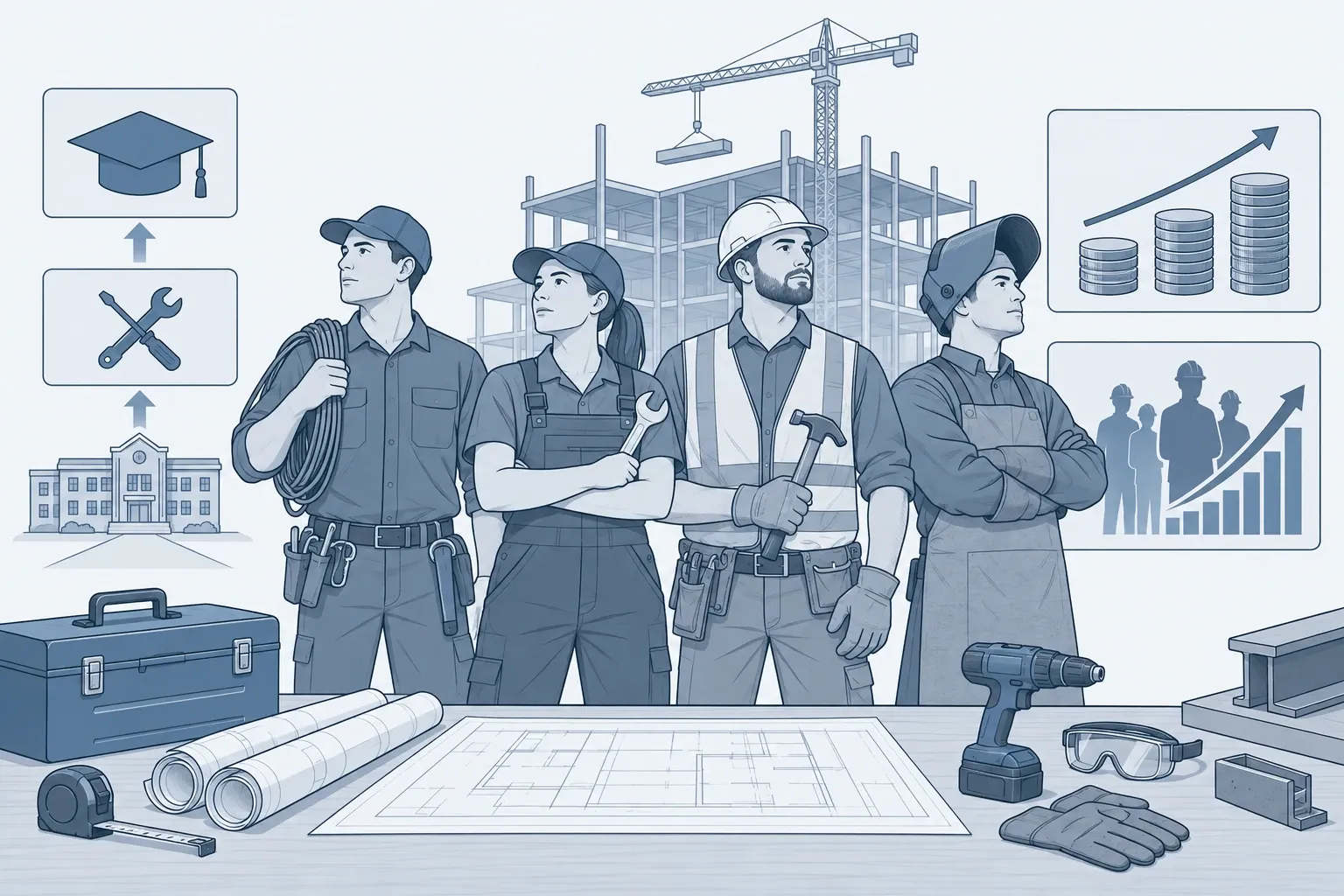
If you want solid earnings without a four‑year degree, skilled trades and other blue‑collar roles can get you into paid work fast, often with employer‑sponsored training. In this guide you’ll see typical US wages, real training timelines (apprenticeships, certificates or short on‑the‑job learning), and demand signals you can verify. Each figure links to the original source so you can check details for your state and compare options to fit your budget and timeline.
What do entry paths look like and how long do they take?
- Electrician: most workers enter through a multi‑year paid apprenticeship; most states require a license. The federal occupation profile lists apprenticeship as the typical training route, with high school as the usual entry education. Bureau of Labor Statistics (electricians).
- Plumber/pipefitter/steamfitter: similar path—4 to 5 years of apprenticeship combining about 2,000 hours of paid work and related instruction per year; licensing is common. Bureau of Labor Statistics (plumbers).
- Solar photovoltaic (PV) installer: typically high school plus up to one year of on‑the‑job training; some workers take short technical courses. Bureau of Labor Statistics (solar PV installers).
- Apprenticeship basics: Registered Apprenticeship is paid from day one, with progressive raises and a nationally recognized credential. Apprenticeship.gov.
How much do common blue‑collar jobs pay?
Below are national medians (the midpoint, not a starting wage) you can use as benchmarks. BLS also shows the overall US median for all workers at about $50,980 (May 2025) for context on each page.
- Electricians: $63,190 median (May 2025). Outlook: +9% projected 2025–35. BLS electricians profile.
- Plumbers, pipefitters and steamfitters: $63,800 median (May 2025). Outlook: +7% projected 2025–35. BLS plumbers profile.
- Solar photovoltaic installers: $53,140 median (May 2025). Outlook: +37% projected 2025–35. BLS solar PV profile.
For a wider look at fast‑growing occupations—including wind turbine technicians and solar installers—see the BLS employment projections highlights for the current decade. BLS projections news release and the analytical overview in Monthly Labor Review. BLS Monthly Labor Review.
What does training cost—and how do you budget it?
- Community‑college certificates: As a planning anchor, average in‑district tuition and fees at public two‑year colleges are about $4,150 in 2025–26 (before tools, books and any aid), according to the College Board. College Board.
- Apprenticeships: you’re employed while training, and wages rise with skills; you may still pay for some related instruction or tools, but the model reduces upfront tuition. See how wage progression and credentials work. Apprenticeship.gov.
If you want to weigh trades against degrees purely on earnings potential, scan our overview of high‑earning roles and what it takes to qualify: highest‑paying jobs.
Which options fit your goals? A head‑to‑head comparison
- Timeline to employability
- Electrician or plumber apprenticeship: typically 4–5 years to journey level; paid throughout. BLS electricians; BLS plumbers.
- Solar PV: often 0–12 months of structured on‑the‑job training after high school. BLS solar PV.
- Earnings trajectory
- All three pay above the overall median for all workers once fully qualified, with electricians and plumbers clustering in the low‑to‑mid $60Ks. BLS electricians; BLS plumbers.
- Demand signals
- Electricians and plumbers show faster‑than‑average national growth; solar rises from a smaller base but grows much faster. BLS electricians; BLS plumbers; BLS solar PV; plus decade‑wide projections. BLS projections.
- Upfront costs
- Apprenticeships shift costs to time and tools while paying wages; community‑college certificates tend to have low tuition but may require more upfront cash. Apprenticeship.gov; College Board.
How to choose and get started in the next 60 days
- Pick a target role and validate demand locally
- Search your state’s “occupational employment and wage” map from the BLS link on each occupation page to compare median wages by metro. Example: electricians page with state data links.
- Decide your training route
- Apply to a union or employer apprenticeship if available, or price a one‑year certificate at your local community college using the College Board’s state ranges as a reference point. College Board. Use the national portal to find live apprenticeship openings. Apprenticeship.gov.
- Prepare application materials employers scan quickly
- Keep a one‑page structure that passes screeners; follow the checklist in our guide to how to write a resume.
- Practice interviews focused on safety, troubleshooting and customer work
- Trades interviews often probe problem diagnosis and job‑site safety. Use common prompts from job interview questions.
How will you know it’s working once you’re in?
Track the basics employers use to judge progression:
- Wage steps: are you hitting the scheduled increases in your apprenticeship or post‑probation period? Apprenticeships are designed with progressive raises tied to skills. Apprenticeship.gov.
- Hours and safety: are you getting enough hours in core tasks and keeping a clean safety record?
- Credentials: are you logging on‑the‑job hours, completing related instruction, and scheduling exams required for state licensing where applicable (e.g., electrician or plumber)? See license expectations on the BLS occupation pages: electricians; plumbers.
- Local pay vs. national medians: compare your offer to the BLS median for your occupation and state; national medians above come from May 2025 data and are updated annually. BLS occupation pages.
Where demand is rising—and why it matters for you
Federal projections across the 2030s show especially fast growth for wind and solar trades, with infrastructure upgrades supporting demand in electrical work. Use these signals to prioritize apprenticeships or certificates that line up with local employers bidding on energy, manufacturing or data‑center projects. See the decade‑wide highlights in the BLS projections release and deeper context in the Monthly Labor Review. BLS projections; BLS Monthly Labor Review.
Frequently asked questions
What does “blue‑collar” usually include today?
There isn’t a single legal definition, but employers and data sources place many construction, installation, maintenance and repair, manufacturing, transportation and some energy roles in this bucket. Examples in federal data include electricians, plumbers and solar photovoltaic installers. We use wage, training and outlook information from the Bureau of Labor Statistics for these occupations.
Can I earn while I train in the trades?
Yes. The US Department of Labor’s Registered Apprenticeship model is a paid job from day one, with progressive wage increases and classroom instruction leading to a portable credential. See how programs work and search openings on the official portal, which explains paid on‑the‑job learning and wage progression. <a href="https://www.apprenticeship.gov/employers/registered-apprenticeship-program" target="_blank" rel="nofollow noopener">Apprenticeship.gov</a>.
How much classroom time do I really need?
It varies by trade. Electricians and plumbers typically complete 4–5‑year apprenticeships that combine paid work and related instruction, while solar photovoltaic installers often learn through up to one year of on‑the‑job training after high school. See timelines on the relevant federal occupation pages: <a href="https://www.bls.gov/ooh/construction-and-extraction/electricians.htm" target="_blank" rel="nofollow noopener">electricians</a>, <a href="https://www.bls.gov/ooh/construction-and-extraction/plumbers-pipefitters-and-steamfitters.htm" target="_blank" rel="nofollow noopener">plumbers</a>, and <a href="https://www.bls.gov/ooh/construction-and-extraction/solar-photovoltaic-installers.htm" target="_blank" rel="nofollow noopener">solar PV installers</a>.
Is community college still good value for trade certificates?
For 2025–26, average in‑district tuition and fees at US public two‑year colleges is about $4,150. That gives you a ballpark for certificate costs before tools and materials. Figures come from the College Board’s annual pricing report. <a href="https://newsroom.collegeboard.org/trends-college-pricing-and-student-aid-report-published-tuition-prices-public-institutions-and" target="_blank" rel="nofollow noopener">College Board</a>.
Which blue‑collar roles are growing the fastest nationally?
Recent federal projections list wind turbine service technicians and solar photovoltaic installers among the fastest‑growing occupations through the 2030s, reflecting energy and infrastructure trends. See the BLS employment projections overview and news releases for the latest decade. <a href="https://www.bls.gov/news.release/archives/ecopro_08282025.htm" target="_blank" rel="nofollow noopener">BLS Employment Projections</a>.
In this section Careers