
Well‑paid careers that don’t require a bachelor’s and how to break in
You don’t need a four‑year diploma to reach six figures. Here are US jobs that pay well without a bachelor’s, what each actually requires, and how to start now.
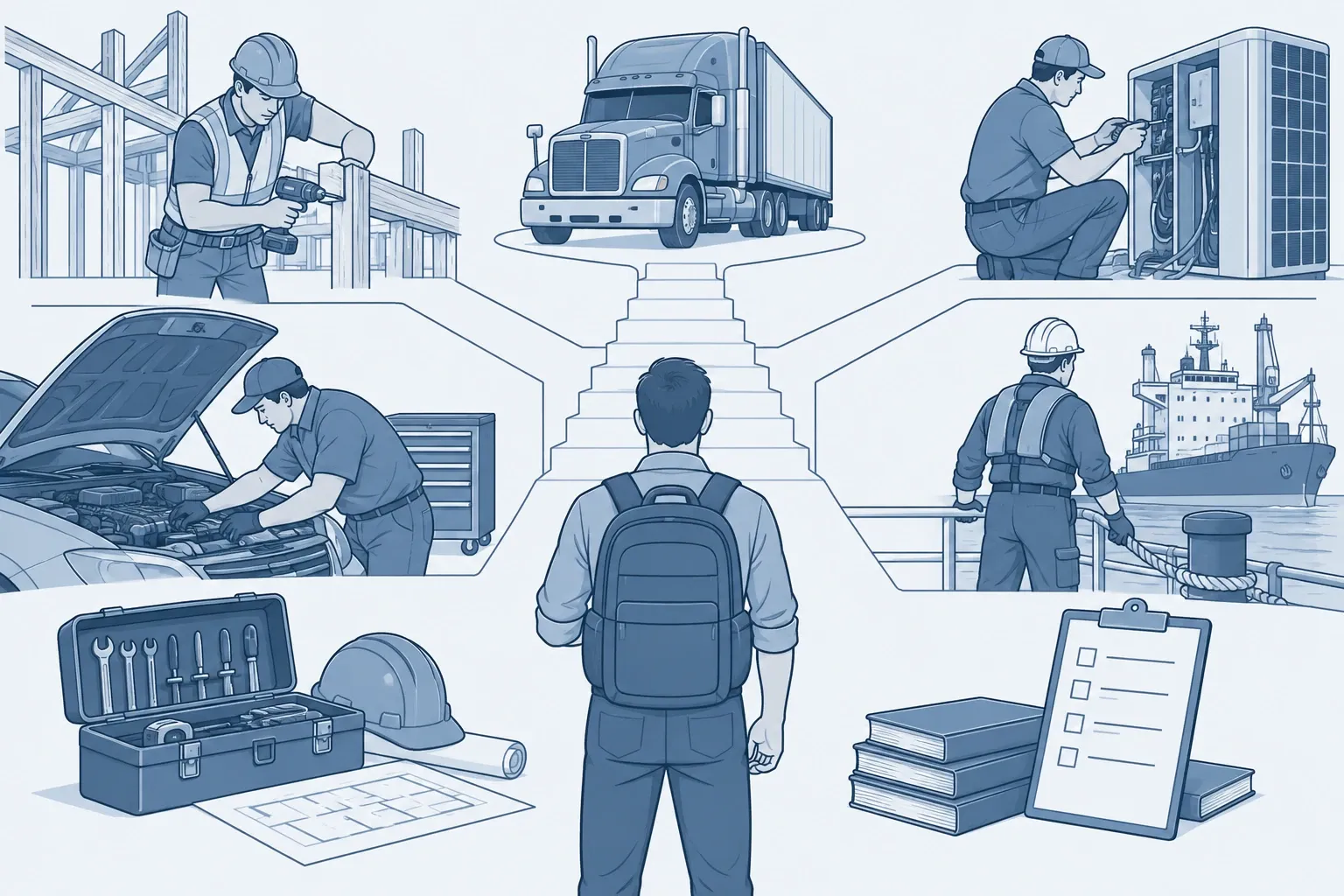
If you want strong earnings but not four years of tuition and time out of the workforce, several US careers pay well with apprenticeships, licenses or employer training instead of a bachelor’s degree. Below, you’ll find clear criteria to judge options, a side‑by‑side view of salaries and entry requirements, and step‑by‑step actions to get traction this month. All pay figures and prerequisites are from primary sources so you can plan with confidence.
What should you look for in a high‑pay, no‑degree path?
- Earnings you can verify: use federal data with a recent “median annual wage,” not anecdotes.
- A defined entry route: apprenticeship, license, certification or employer training you can actually follow.
- Time to employability: how many months until you can work at full pay (or earn while you learn).
- Gatekeepers and limits: age caps, medical standards, background checks or shift work you must accept.
Which jobs really pay well without a bachelor’s?
Air traffic controller (ATC)
- Pay: The median annual wage was $148,080 in May 2025, according to the U.S. Bureau of Labor Statistics’ Occupational Outlook Handbook. BLS OOH (Air Traffic Controllers).
- Entry path: You apply to the Federal Aviation Administration, must pass aptitude and medical screenings, complete several months at the FAA Academy, and progress through on‑the‑job training. Applicants must be under age 31 at application. FAA qualifications.
- Who it fits: Strong spatial reasoning under pressure; willingness to relocate to specific facilities and work shifts.
Elevator and escalator installer/repairer
- Pay: Median annual wage was $109,910 in May 2025. BLS OOH (Elevator and Escalator Installers and Repairers).
- Entry path: Typically a 4–5 year paid apprenticeship combining classroom instruction with supervised on‑the‑job training; many roles are unionized. The OOH also points you to local contractors and apprenticeship committees. BLS OOH (Elevator Installers).
- Who it fits: Comfortable with heights, mechanical systems and safety protocols; okay with emergency call‑outs.
Power plant operator, distributor, or dispatcher
- Pay: Median annual wage was $105,080 in May 2025. BLS OOH (Power Plant Operators, Distributors, and Dispatchers).
- Entry path: At least a high school diploma; extensive employer training and, in many states, a license. Shift work is common. BLS OOH (Power Plant Operators).
- Who it fits: Detail‑oriented problem‑solvers comfortable monitoring critical systems.
Tip: Many of the absolute top earners in the US do require degrees or long postgraduate training. If you want the broader landscape, see our overview of highest paying jobs and what they demand.
How do you choose among these options?
Ask yourself:
- How fast do you need to earn? Apprenticeships pay from day one but start below journey‑level wages; ATC trainees are paid while in Academy and training but must pass screens and relocate.
- Do you meet hard filters? ATC has a strict under‑31 application age and medical standards per the FAA; elevator work requires passing physical fitness and safety training; power plant roles often require background checks and drug screening. Sources: FAA qualifications; BLS OOH (Elevator Installers); BLS OOH (Power Plant Operators).
- Where can you live? ATC placements follow facility needs; elevator and power plant roles cluster in metro areas with construction or generation assets.
What are the concrete first steps to get started?
-
Air traffic control
- Create a USAJOBS profile and watch for “Be ATC” public announcements; complete the ATSA exam and medicals when invited; be ready to report to the FAA Academy in Oklahoma City. See eligibility on the FAA qualifications page.
-
Elevator installer/repairer
- Search for registered apprenticeships via your state’s apprenticeship agency or local union/contractor pages referenced by the OOH; expect multi‑year, paid training with periodic raises tied to classroom hours and competencies. Details in the BLS OOH profile.
-
Power plant operator
- Look for trainee or auxiliary operator postings at utilities and independent power producers; check state licensing pages once hired. The entry pathway and licensing notes are summarized in the BLS OOH profile.
How will you know it’s working (and what to track)?
- Milestones: applications submitted, assessments passed, interview invites, apprenticeship acceptance, and credential steps (e.g., safety cards, first‑aid/CPR, site clearances). Match each to the source requirements you’ve read on the OOH or FAA pages.
- Earnings ramp: compare your offer and progression grid to the median wages cited above for your occupation to sanity‑check expectations. Sources: BLS OOH (ATC); BLS OOH (Elevator Installers); BLS OOH (Power Plant Operators).
- Safety and fit: after your first 90 days, check whether hours, shift patterns and physical demands match what the OOH and FAA describe; raise misalignments with your supervisor early.
Want more options?
If you prefer digital work or customer‑facing careers, some roles pay well without a bachelor’s but rely on portfolios or employer training rather than fixed credentials; however, median pay is usually below the jobs above. For a broader scan of trade and field roles, see how blue‑collar jobs stack up on training length and demand.
In this section Careers