
Online CPR that really counts: providers, prices and renewal rules
You want a CPR card fast, but it still has to satisfy your employer or license. Here’s how online CPR really works in the U.S., who issues valid cards, what it costs and how renewal works.
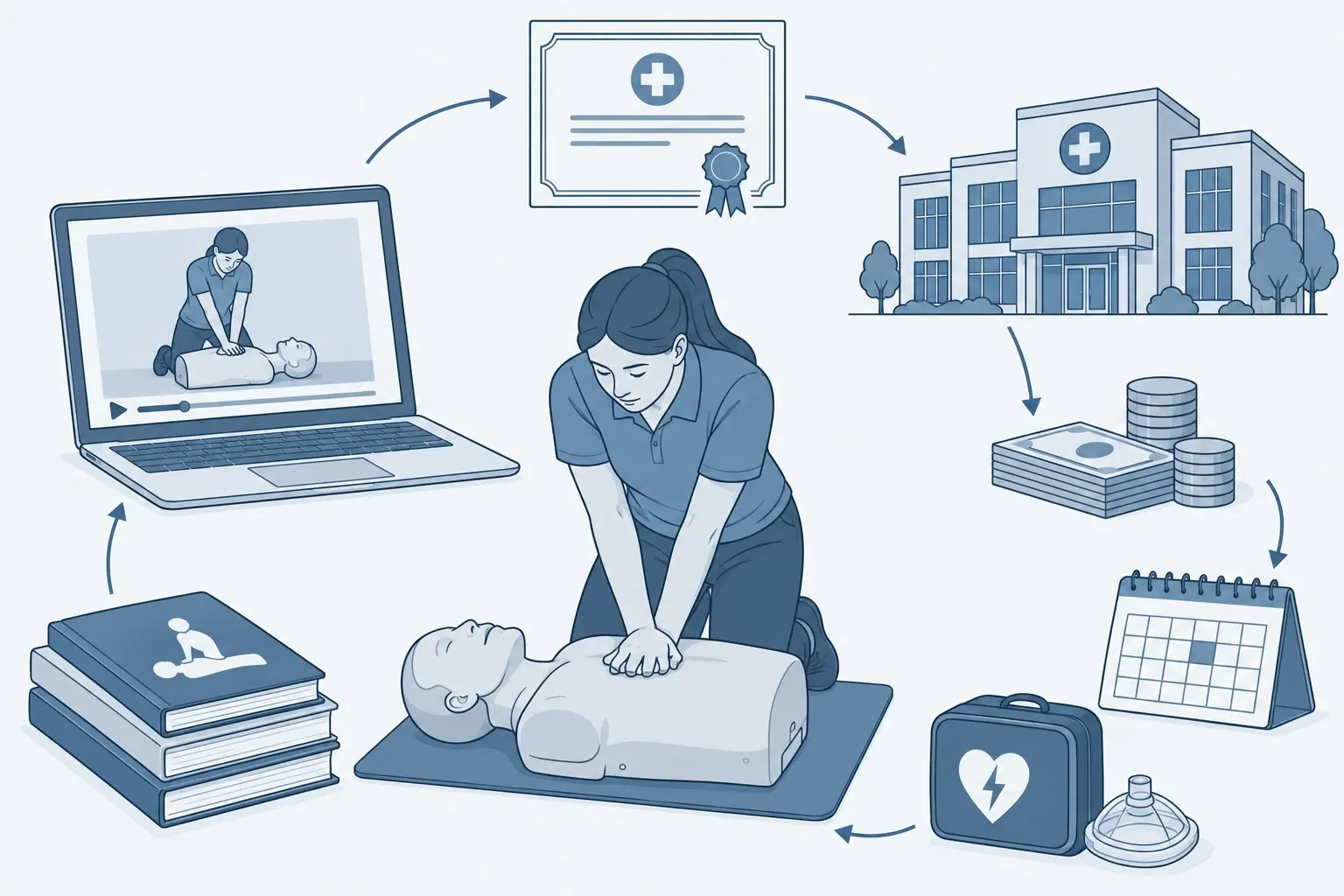
If you search for “CPR certification online,” you’ll see everything from $20 quizzes to blended programs that include a local skills check. Employers and regulators usually require the latter. Below, you’ll learn which online options produce a card workplaces accept, how much you should expect to pay, how long training takes, and how to renew on time—backed by policies from the American Heart Association (AHA), the American Red Cross (ARC), and other national providers.
Which “online” CPR certifications actually count for work?
For workplace compliance, training must include hands‑on skills practice and testing—not just a web lesson. OSHA states that first aid/CPR training “should have trainees develop hands‑on skills through the use of mannequins and partner practice,” which means online‑only courses don’t meet the intent of OSHA standards for jobs that require CPR. See the OSHA interpretation letter for details (OSHA).
The two largest issuers confirm this: to obtain an American Heart Association (AHA) course completion eCard for CPR/BLS, you must finish online learning and a hands‑on skills session with an AHA Instructor or an approved verification station (AHA course FAQs; AHA BLS options). The American Red Cross says the same: blended learning includes the online course plus a required in‑person skills session to earn certification (Red Cross BLS online; Red Cross CPR certification). The Red Cross also labels its online‑only CPR course as not meeting OSHA workplace requirements (ARC course page—OSHA note).
BLS vs. “standard” CPR/AED: which one do you need?
- Healthcare roles (nurses, techs, EMT trainees, dental/medical offices): employers usually require Basic Life Support (BLS). The AHA specifies that successful completion yields a BLS Provider Course Completion eCard valid for two years (AHA BLS overview).
- Most other workplaces (offices, fitness, education, childcare when allowed by state rules): a lay‑rescuer course such as Heartsaver/First Aid CPR AED is generally appropriate; the AHA notes its Heartsaver Pediatric First Aid CPR AED is designed to meet childcare regulatory requirements in all 50 states, but always confirm your local rule.
Other reputable national issuers also offer blended CPR with hands‑on skills and two‑year cards, including the National Safety Council (NSC) and HSI (formerly ASHI/MEDIC First Aid). Both document that certification requires eLearning plus an instructor‑led skills test and is valid for two years (NSC program; HSI program; NSC online + skills).
How long does valid online CPR take?
Plan for two parts:
- Online modules: the AHA estimates about 3 hours for the Heartsaver online portion.
- In‑person skills: about 2 hours with an instructor/verification station.
These are AHA published estimates; your timing may vary by format and provider (AHA Heartsaver course options and time).
How much does it cost?
Expect two fees in most cases:
- Online coursework: the AHA Heartsaver CPR AED Online cognitive module is listed at $19.50 (AHA Shop price). The Red Cross Adult First Aid/CPR/AED online‑only course is currently $37 and explicitly notes you must add a skills session for an OSHA‑compliant certificate.
- Hands‑on skills session: priced by local training centers; the Red Cross states the skills session is an “additional cost” beyond the online course. Because pricing varies by city and venue, check nearby AHA Training Centers or ARC class listings.
If you’re comparing online programs broadly, use the same filters you’d use for other e‑learning buys—our overview on which online courses are worth your time and money walks through value checks.
Where to get a valid online CPR card (blended formats)
- American Heart Association (AHA): online learning plus in‑person skills or a verified station; results in an AHA eCard (AHA BLS options; AHA FAQs).
- American Red Cross (ARC): blended courses with required hands‑on skills to earn certification; online‑only is knowledge‑only and not OSHA‑compliant (ARC BLS online; ARC CPR certification).
- National Safety Council (NSC): eLearning plus instructor skills testing; two‑year card.
- HSI (ASHI/MEDIC First Aid): classroom, blended, or remote skills verification; two‑year card for CPR/AED.
Step‑by‑step: earn a card employers accept
- Confirm the course type your job or license requires (BLS vs. CPR/AED) using your HR policy or licensing board page. AHA’s BLS is the common healthcare requirement.
- Choose a blended course from AHA, ARC, NSC or HSI. Verify that the listing includes an in‑person skills session; OSHA expects hands‑on practice for workplace training.
- Complete the online modules.
- Book and attend the skills session; bring your online completion certificate if requested (ARC/AHA sites describe this process: ARC BLS online; AHA BLS options).
- Receive your digital card (AHA eCard or ARC certificate) once you pass skills.
Renewal: how often and how to do it
- Validity: AHA course completion cards are valid for two years through the end of the issue month. The Red Cross states CPR certification “lasts 2 years,” with abbreviated renewal courses available for current cardholders (ARC renewal).
- Format: Renewal still includes hands‑on skills (see provider pages above). Some employers set stricter refresh intervals; check your policy.
How to verify your card and avoid scams
- AHA: Expect an email from your Training Center or from eCards@heart.org; you can confirm legitimacy and details with the issuing Training Center listed on the eCard (AHA: What to expect).
- ARC: Red Cross issues a digital certificate for two years after successful completion of a blended or instructor‑led class.
- Red flags: “instant online certification” with no skills check is unlikely to meet OSHA‑aligned workplace requirements (see OSHA guidance).
Time and money trade‑offs
If you only need knowledge quickly (no job requirement), a low‑cost online‑only course can be useful for awareness—but you won’t receive an OSHA‑compliant card without the hands‑on session. If you need a card for work, choose a blended course, budget for the local skills fee, and schedule the in‑person session right after you finish the e‑learning to avoid delays.
Frequently asked questions
Does a 100% online CPR course (no in‑person practice) count for work?
Usually no. OSHA’s guidance says first aid/CPR training should include hands‑on skills with manikins and practice partners, so online‑only coursework does not satisfy workplace requirements. Major issuers like the American Heart Association and American Red Cross require a hands‑on skills session to issue a completion card. See OSHA’s interpretation and AHA/ARC course pages for details.
Do I need BLS or a standard CPR/AED course?
If you work in healthcare or are a first responder, employers typically require Basic Life Support (BLS). AHA confirms BLS uses team‑based, healthcare‑level skills and results in a BLS Provider eCard valid for two years. For most other workplaces (offices, schools, childcare where specified), a lay‑rescuer course such as Heartsaver/First Aid CPR AED is appropriate—check your employer’s policy first.
How fast can I finish an online CPR certification that employers accept?
Plan for a blended format: complete online modules, then an in‑person skills session. The AHA’s Heartsaver option estimates about 3 hours online plus about 2 hours for the hands‑on session; timing varies by course and training center. The skills appointment is what turns your online study into a valid card.
How long does a CPR certification last and when should I renew?
AHA course completion cards are valid for two years through the end of the issue month, and Red Cross CPR certifications also last two years. Many providers offer shorter renewal classes if your card is still current; always check your employer’s renewal window and any grace‑period rules.
What should I budget for?
Expect two parts. Example prices: AHA’s Heartsaver CPR AED Online cognitive module is listed at $19.50; the Red Cross Adult First Aid/CPR/AED online‑only course is $37 and explicitly notes you must add an in‑person skills session (separate fee) to get an OSHA‑compliant card. Skills session prices are set by local training centers and vary by city.
In this section Training